


Jul 26, 2019


Nov 10, 2018


Jul 28, 2018


Jul 15, 2018


Back when it was possible to get an online shop without forging ID, a dear friend of mine clicked "kg" instead of "item" whilst buying root ginger. She spent the next year peddling the crystal stuff to everyone she knew. Easy mistake, we've all been there, or at least in the neighbourhood.
It's marginally less explicable how I accidentally bought three kilos of butternut squash in person. I had a super-sized trolley. It looked small. And I didn't notice the price was by weight.

I batch-cook every now and again, and I don't just mean mincemeat. Dreamily stirring along to the dulcet tones of Radio 4 is an excellent way to spend a Sunday afternoon. My problem now is that it saves a lot of time, and what's the point of that?
I decided to get around this efficiency by slow-roasting the squash in multiple trays over an afternoon, and then using individual portions to make various recipes over the following days. I had carnaroli rice in stock, so first up was risotto.
The squash
I rather like eating the roasted skin of butternut squash, browned and blistered from the oven. However I didn't think the texture would work in the recipes I had in mind, so I peeled the squash, cut away the seeds and most of the fibrous membrane (even in lockdown, life can be too short) and sliced it into even-sized chunks. I generally go for approximately one inch cubes/pyramids as they offer a good amount of surface area - which you want to maximise for caramelisation - but leave enough margin of error for the inattentive cook.
I stirred in handfuls of dried rosemary and sage, and a decent spoonful of red chilli flakes. These are my go-to flavours for butternut squash, and I always have plenty of them in stock, but you could substitute other herbs and spices you have to hand. Then tumble the squash with oil and salt (non-negotiable) and spread them out on trays.
I'm actually not being facetious when I say use multiple trays: piling vegetables on top of each other leads to steaming and stops the sugars from transforming into the intense flavours which are the point of the roasting technique. They will cook faster and more evenly if you give them some breathing room. (This is just as true in a frying pan as in the roasting tray - socially distance your veg!)
I roasted them at about 160 degrees, giving them a couple of turns, until they were soft and crunchy and golden-brown.
Butternut squash and chestnut risotto
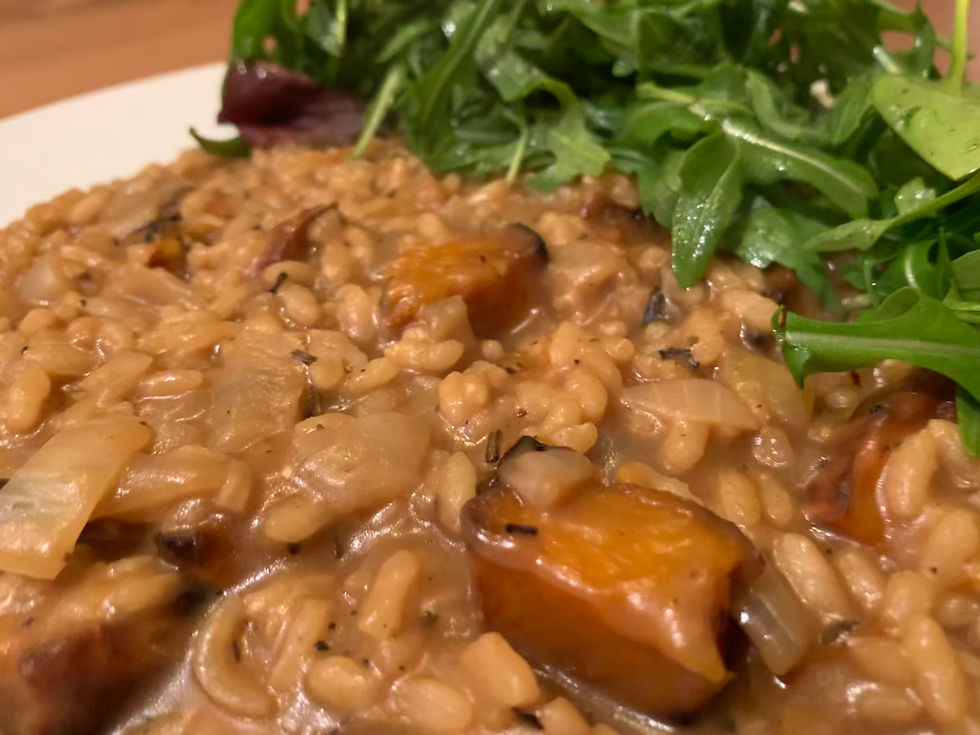
Carnaroli rice gives a much better texture to risotto than the ubiquitous arborio: which is to say it actually retains texture. It's a little more expensive but not difficult to find - or at least, no more so than any rice these days. Most of the ingredients are stock-cupboard basics - some alternative suggestions come at the end. Amounts are, as ever, subjective - look, taste, smell and adjust.
Ingredients
Roasted butternut squash
Carnaroli rice
White onions
Chicken stock
Red wine
Chestnut puree
Lemons
Parmesan
Method
Dice the onions finely and fry gently in olive oil. It didn't occur to me to caramelise them but it would definitely be worth doing - just cook them for longer.
When the onions are done to your satisfaction, add the rice to the same pan and toast it in the oil (you may want to add a little more oil here). This step helps the risotto achieve a desirable texture and adds flavour. For an excellent in-depth analysis of the science of risotto click here.
Splash in wine - I used the paltry remains of a bottle of malbec I had opened solo for Zoom birthday drinks - and let the rice sizzle and steam before adding chicken stock. Continue adding stock a ladleful at a time, allowing the rice to slowly absorb the liquid, and top up with boiling water if you need to. It is a myth that risotto requires constant stirring, but if you want to spend the time doing so, knock yourself out.
When the risotto seems a couple of minutes away from being done, add the squash, the chestnut puree, a big handful of grated parmesan and a slice of butter. Stir through and muddle the squash down into the risotto. Taste, and add lemon juice (you'll want some, but use more or less depending on the acidity of the wine) and possibly salt. Give the risotto a minute for the new ingredients to make friends and serve with another sprinkle of parmesan and a sharply dressed salad.
Variations
I added chestnut puree because I happened to have it, but you could leave it out or stir through some roughly chopped chestnuts. Almonds would also work with the squash, and sprinkled on the top would make a good textural contrast.
You could use vinegar instead of wine or lemon juice, but watch the quantity, especially if you are using it at the end. A sherry vinegar could work well.
The chestnut puree gives enough silkiness to the risotto that I think you could make it vegan simply by substituting the stock and adjusting the salt and acid to compensate for the lack of parmesan.
Removing the chestnuts and using blue cheese with bacon or pancetta would be a delicious way to take the concept of stockpiling out of the supermarket and onto your waistline.


Comments