


Jul 26, 2019


Nov 10, 2018


Jul 28, 2018


Jul 15, 2018


To follow the saffron lamb I made a large Greek cake called karidopita, chosen almost entirely because it needed most of the remaining walnuts I had been attempting to use up that week. It's also based on a meringue, which is a point in any pudding's favour.
Whilst I don't immediately associate walnuts with Greek cooking, I've always loved baklava and loukoumades and this cake is similarly drenched in syrup. From the original recipe, I nudged the flavours around the Mediterranean with the addition of rose and pomegranate, increased the orange and omitted the cognac (pantry fail).
This cake proved such a success I knew I would be making it again: one friend described it as "smug" with its own deliciousness, and my neighbour - who had only had leftovers - promptly commissioned a whole one to take into work. The irony of something I baked being a hit is not lost on me, but it proves this is an easy recipe.
Ingredients
380g chopped walnuts - I blitzed walnut pieces to a fairly fine rubble in the food processor
180g breadcrumbs - I had frozen in stock, but easy to make from fresh bread.
200g good quality unsalted butter, plus extra for greasing the cake tin
165g caster sugar for the cake, two cups of caster sugar for the syrup - I used golden but I don't reckon it matters
7 large eggs, separated into whites and yolks
Minced zest and juice from three large oranges
1/2 a tsp cream of tartar
4 tsps baking powder
2 tsps ground cinnamon
1 tsp ground nutmeg
1 tsp ground clove
Good quality rose and vanilla extracts
Kosher salt
A pomegranate or whatever you want to use to decorate the cake.
I used a nine inch / 23cm springform cake tin - the original recipe suggests a 30cm tin which may well explain why mine took longer to cook than anticipated.
Instructions
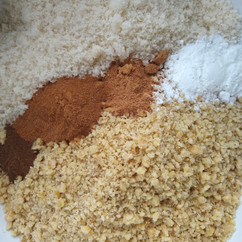
In a large bowl, combine the breadcrumbs, walnuts, baking powder, cinnamon, nutmeg, clove and a teaspoon of kosher salt.
In a separate bowl, cream the butter and 165g of caster sugar together on high-speed until smooth and fluffy - you want to get as much air as possible into this recipe at every stage. Add the egg yolks one at a time and whisk in thoroughly. Add all the orange zest and 1/3 cup of orange juice.
Combine the walnut mix with the butter mix in the larger bowl (or the bowl that is not needed as part of a Kitchenaid type whisking contraption - you need to do more whisking again now).
Making sure all your equipment is sparkling clean and free from any grease, add the seven eggwhites to a bowl along with a pinch of salt and half a teaspoon of cream of tartar - this will help stabilise the meringue later. Don't worry if it goes a bit lumpy, it will sort itself out. Whisk on a slow speed to keep the bubbles as even as possible, then gradually increase the speed to an eventual medium high (I get to 8 out of 10 on my Kitchenaid). The Bake-Off shtick of turning the meringue upside down is a good indicator of whether it's ready, but I always whisk for a little longer until it is really thick and glossy. Think shaving foam.
Now you need to combine the meringue with the dense walnut mix without knocking all the air out. The best way to do this is to add a dollop of meringue to the walnut mix and fold it in, without worrying too much. This will slacken the walnut mixture, allowing you to fold in a second dollop a little more gently. Repeat until all the meringue has been folded in. You should not be able to see any streaks of egg white.
Scrape the mixture into a buttered cake tin and bake it at 170 fan for between 30 and 40 minutes, until a skewer comes out clean. It should be gently risen and a dark golden brown. Don't worry if there are a couple of cracks across it, you won't see them at the end. Leave the cake to cool completely.

To make the syrup, combine two cups of golden caster sugar with two cups of water, all the remaining orange juice from the three oranges you juiced earlier, two teaspoons of rose water, two teaspoons of vanilla extract and a teaspoon of salt. Cook over a medium heat, stirring as the sugar dissolves. If you have a thermometer, wait until the syrup gets to 105 degrees; if you don't, use your senses to determine when it is sufficiently... syrupy. Add another teaspoon of rosewater and stir through. Chanting "Paul Hollywood is wrong about rose" as you do so is optional, but recommended.
Now place the cake back into its tin and over another dish - this is for escaping syrup. Use a toothpick to prick an even spiderweb network of small, deep holes all over the cake. These will disappear when you add the syrup.
Slowly pour the syrup into the holes of the cake, a ladle at a time, allowing each to be absorbed before adding the next. Depending on the size of tin you used, the end result may be the cake actually soaking in a bath of syrup. This is not a bad thing.

I left the cake for several hours, then took the syrup which had naturally escaped the tin and poured it back over. I did this twice over about 24 hours, but the original recipe doesn't call for it so if you don't have time it probably isn't the end of the world. Likewise this cake seems to improve with age, but it tastes excellent within 12 hours.
I found the easiest way of removing the cake from its tin was the "double flip" using a cooling rack and the serving plate. Decorate however you want: pomegranate seeds look pretty but so would rose petals or edible flowers. When I made it for lunch I served it with greek yoghurt: all that sugar benefits from a more acidic foil than cream or icecream.

I have made this cake twice now, with great success. I would like to try a variant with almonds and lemon, possibly with lavender water. Now I just need an excuse to bake it.
Update

I made an almond lemon version of this for a houseparty. The cake was flavoured with lemon zest and juice, ginger, cinnamon and clove. I used more lemon juice, star anise and cardamom in the syrup. This confirmed what I suspected before: the strength of the syrup flavour is substantially diluted by the cake. I used the packaged chopped almonds without further grinding. Although the cake rose well I think the texture would benefit from slightly more refined nuts.




Comments