


Jul 26, 2019


Nov 10, 2018


Jul 28, 2018


Jul 15, 2018


Making sloe gin is easy. But it does take a while. Especially if you forget about it.

I picked the sloes last October, brought the berries back to London and froze them to break the skins. Then I filled large sterilised jars about half-way with sloes, before topping up with gin.
Having done a bit of research (i.e. looked at the Sipsmith website) I decided against adding sugar at this stage, figuring the injunction to add sugar syrup to taste at the end would keep the finished product from being either too bitter or too syrupy.
On the other hand I ignored Sipsmith's advice to use more expensive gin, because, well... they would say that, wouldn't they? Supermarket own brand London Dry would do just fine, when the sloes and sugar had done their job.
I put the jars in the cupboard and just about remembered to shake them every day for a couple of weeks, watching the gin gradually change from clear to pink, to red, to purple, and finally almost to black. Then I forgot about the jars for... er... nine months. Most recipes seem to recommend two or three months. Country Life says no more than six, but only because the sloes might turn bad, but bathed in alcohol it's hard to see how that could happen. In the event the sloes finally emerged from their jars looking much better than I would after a nine month gin-soak.
So, the decanting.
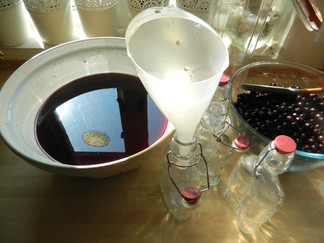
I made a support from wooden skewers for the funnel and strained the gin through muslin, reserving the sloes. I tasted it and my tongue instantly glued itself to the roof of my mouth as the tannins hit. It needed sugar, and lots of it. I made simple syrup with a 50/50 ratio of caster sugar and water and added it to the gin one large splash and stir at a time, tasting in between.
Naturally the gin became sweeter but to my surprise it also became brighter, as if the syrup were waking up the flavours. I continued mixing until I was happy with the overall taste, before pouring it into small sterilised bottles ready for drinking.


Comments