


Jul 26, 2019


Nov 10, 2018


Jul 28, 2018


Jul 15, 2018


After the success of the the Figgy Pudding and Black Forest Florentines last weekend, I thought it would be worth experimenting to see if I could make a dairy-free Florentine. It was mostly successful...

Just about recovering from my second cold of the new term, I had no interest in leaving the house. Ingredients were therefore restricted to what I had in the cupboard. I had - thoroughly dried - figs and dates left over from last time, so decided to do a variation on the Figgy Pudding Florentines. I found pan de higo listed under Fig and Almond in The Flavour Thesaurus. Looking up a recipe, I found it contained anise and cinnamon. I deliberated between adding fennel seeds and ground cinnamon to the mixture, or star anise and cinnamon stick to the caramel. I plumped for the latter on the basis that it would result in a more subtle flavour.
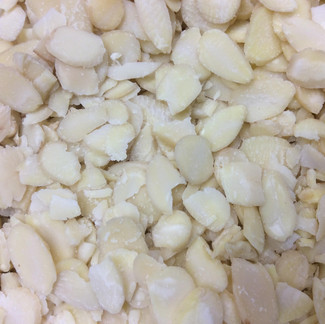
I diced 50g of figs and 50g of dates to around 7mm. I had liked both the triple sec and amaretto last time, so I soaked the fruit in 1 tablespoon of triple sec and 1 teaspoon of amaretto. I combined the mixture with 100g of flaked almonds and a large pinch of Maldon seasalt. So far, so Florentine.
I was about to add plain flour to coat the fruit and nuts, but made a last-minute decision to try making the biscuits gluten-free, so used two tablespoons of cornflour instead. This had a different effect to plain flour: thickening the slight stickiness. It may have contributed to the final texture.
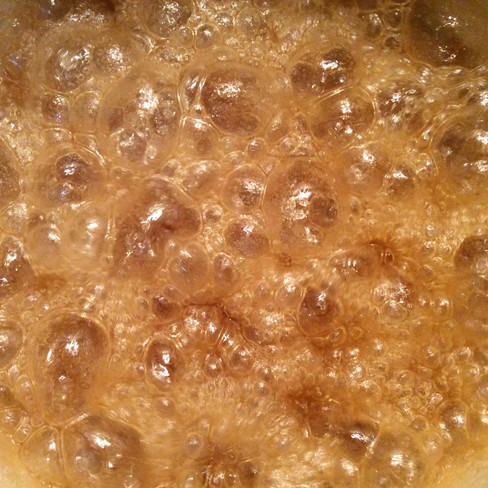
Time to make the caramel. For Florentines I normally use butter and demerera sugar. I was concerned about how the demerera would melt on its own, so I decided to use mostly caster sugar. As I wasn't using butter, I would also need to use more sugar than normal to give me enough caramel. I melted 125g of caster sugar with 50g of demerera; added four tablespoons of triple sec; and threw in a cinnamon stick and a single star anise. Normally, the sugar dissolves into the liquid and caramelises as the water evaporates. This time, the sugar dissolved but then rapidly recrystallised into the texture of classic soft brown sugar. See here for an explanation of what went wrong. I added a few tablespoons of water, dissolved the sugar again - this time with more care - and boiled it to the "soft ball" temperature of 115 degrees. I wouldn't generally bother with this level of precision for Florentines, but the absence of butter was making me anxious.
I removed the star anise and cinnamon stick and stirred the caramel through the fruit and nuts. For a test, I pressed a tablespoon of mixture into a silicon muffin tin; baked it at 180 degrees for ten minutes; removed it from the oven and let it cool for another ten minutes in the tin. I mentioned last time that nothing sticks to silicon. Well, it turns out fat-free caramel does. I peeled the biscuit away from the tin. It was very crumbly: practically granola; there was clearly insufficient caramel binding it all together.
I made a straight caramel by melting 100g of caster sugar with no additions. I didn't want the sugar to reach too high a temperature or it would turn into a solid lump the moment I added it to the fruit and nuts. Therefore I removed it from the heat as soon as the sugar had all melted and dispersed it through the mixture as quickly as I could.
I very lightly oiled the silicon muffin tins and pressed a tablespoon of mixture into each one. I baked the biscuits for ten minutes at 180 degrees, and left them to cool. After ten minutes, they still didn't pop out in the same way as my normal Florentines, but I coaxed them out and onto the racks. They were noticeably stickier than usual - unsurprising given the amount of sugar involved - and this actually helped with the shaping as any loose bits could be stuck back on. Once they had cooled completely, I couldn't tell which ones I had helped along in this way.
I tempered 115g of dark chocolate using the no-thermometer method, and painted each biscuit with two layers of chocolate, using the brush to create a wavy pattern.
I was worried these Florentines were too chewy, but without prompting my tester pronounced them "very crunchy, then chewy, like toffee", and identified the fig, date, and the orange from the triple sec. The caramel tasted more "caramelised" - that second batch of sugar had made a difference to the flavour as well as the texture. Personally, I think the biscuits could have used more orange, and would recommend using fresh orange zest or candied peel. Although the cinnamon and star anise had smelt divine in the caramel, I couldn't detect them in the final Florentine. My cold probably didn't help, but I think it would be worth experimenting with some ground cinnamon and a couple of teaspoons of fennel seeds - which would also give another crunch to the texture. I also wonder whether any flour at all is actually necessary. Admittedly, that would make the Florentines less a biscuit, more a fruit and nut brittle. I'm not sure that's a problem.






Comments